Anti-Vaxxers have been out in force, protesting California’s Senate Bill 276 that would make it harder for unethical doctors to grant bogus medical exemptions to parents who don’t want to vaccinate their children. Ignorant celebrities have been leading the charge. Last week we got stories about Justin Timberlake’s wife, Jessica Biel doing the lobbying rounds both evil. anti-vaxxer conspiracy theorist, Robert F. Kennedy, Jr.
The dangerous, celebrity idiots don’t like to be called “anti-vaxxers,” they prefer to be described as “pro-informed consent,” or “pro-vaccine choice,” or “anti-forced vaccination,” or “vaccine risk aware,” all of which mean the same thing. Dangerous and ignorant. Here’s an cartoon about the anti-vaxxers that I drew three years ago …
Here are some of my favorite anti-vaxxer cartoons by my buddies – these first two are by Nate Beeler.
Around 1964, I did my very first animation job. It was for CBS and I got to work for the legendary Lou Dorfsman who shaped every aspect of corporate design for CBS in his 40 years there. I was tasked with creating ten, 10 second “teaser” spots which would be used at station breaks on the network.
CBS had just created a break-through technology they called VPA (Vote Profile Analysis) which would hopefully predict the outcome of elections, shortly after voting had begun, with supposedly, a high degree of accuracy. It was top secret. They were going to reveal it when the time was right and the job I had been assigned was to tease the public and build up curiosity until then. We would throw out the letters V P A to the viewers and make everybody wonder what the hell it meant in ten second bits between programs. We also popped the words “Vote Profile Analysis” in small letters in the last few seconds at the bottom of the screen.
So, my first animation experience was to be the manipulation of three simple black type letters into 10 arresting filmic arrangements.
I zoomed a “V” from a tiny dot on the screen to full screenrevolving it upside down while it was joined by “P” which had slid in from the right side. The upside down “V” became an “A” with the addition of the crossbar while the “P” disappeared.
I panned a “V” onto the screen, in another spot, zoomed in to the blackness of the letter and zoomed right back out to reveal that it was now a “P”, then back in and out to reveal the “A”.
I continued on in this fashion, zooming, panning and twirling the letters around through ten variations avoiding the more obvious approach of actually just manipulating the forms into each letter. I kept the letters whole all the time, maintaining their dignity as type forms and not succumbing to “Walt Disney” anthropomorphic transformation or just melding from one letter form to the other.. I felt that it described the “style” of CBS to keep it simple, black and white, elegant movement and transformation.
As simple as it was, and maybe because it was so simple, it became, I think, the most creative endeavor of my short animation career. It’s so compelling to get caught up in the rhythm of a job like that where the ideas just start popping into your brain. It’s good to have a time constraint to work around that forces you to be basic, direct and clean. No time to get “junky” in 10 seconds.
For weeks and weeks before they revealed their proud program that was going to beat all the competition in vote projection, we watched my VPA’s dance around for 10 seconds at every station break.
I haven’t been to the CBS building in many years, so I don’t know what it’s like now, but when I used to go into the building in those days, it wasn’t like going into any other big corporate building; it was carefully designed by Dorfsman (I guess), in every detail. There was the “CBS” typeface that was used everywhere down to the elevator buttons. When you arrived at your floor, there was a spacious waiting area wherein a receptionist sat a plain, clean desk. the décor was of a black and white or subtle grey: floor, rugs, walls, ceiling, etc.. Radiating off this main area there were long corridors going off to the different offices. At the far end of each corridor was the shock of a big square very brightly colored abstract painting. That was the only color. All aspects of the offices were rigidly controlled. Receptionists told me that they couldn’t have even a stray paper clip on their desk. Everything had a place that was design controlled and policed.
When you stepped into that building, you weren’t stepping into a building, you were stepping into a huge, formal piece of graphic design –cool, clean, elegant, black and white.
Down the block sat the NBC building, my next network client, a virtual riot of peacock color.
It was a warm October day in 1962. I was a sophomore at South Side High School in Ft. Wayne, Indiana, excelling in art class, in other subjects, not so much. I was on the staff of the school newspaper as a cartoonist and illustrator. My goals in life were to be an illustrator like Norman Rockwell, or have my own commercial art studio in my hometown, or to be an advertising agency art director and make $10,000 a year. This was 1962. Ten grand was big money.
I would get married, buy a house, have two children and a beautiful wife, drive a new car and, with any luck, be a millionaire by the time I was forty. Everything was going my way. Then, President John F. Kennedy told the nation that Russia had put nuclear armed ballistic missiles in Cuba and we’d have a nuclear war if they didn’t remove them. What?
I was completely blindsided. My parents subscribed to two newspapers, the Democratic morning one and the evening Republican. I read them both, but I only read the comics page and the sports page. I wasn’t even sure of the name of the Russian leader. Nikita who? The only Russians I knew of were Boris and Natasha on “Rocky and Bullwinkle.” Suddenly, my world went up in a ball of radioactive fire.
I was glued to TV news and the newspapers and when I wasn’t, I was painting apocalyptic paintings of skeletons running through a burning landscape of mushroom clouds. All my hopes and dreams were going up in radioactive smoke. A ship was steaming to Cuba loaded with more missiles. Kennedy told Russian Premier Nikita Khrushchev to turn around or they would be blown out of the water. The Russians were not backing down and were making threats. I was frantic. My school had been having air raid drills since I was in Kindergarten. There was a huge air raid siren behind my house that went off every Wednesday at noon, so loud it shook the floor. This is what we’d been training for –this crisis.
Then, on the thirteenth day of the confrontation, the ships turned around and headed back to Russia, after Kennedy made a secret deal, but from that day forward I vowed never to be blindsided again. I started reading the news pages. I learned the names of the leaders at home and abroad. I learned the countries, the issues and the threats. I read the political cartoons, mostly those by Bill Mauldin, who I understood. Herblock and a local cartoonist were regulars in the papers but they didn’t inspire me. Their cartoons were too serious and preachy. Walt Kelly’s “Pogo” made more sense to me than most of the art on the editorial page. Then, when I was in art school, Pat Oliphant came along and made political cartooning look fun.
I saw a way that I could do my very small part to defeat the Communist Soviet Union threat and be paid for my effort. I started drawing freelance political cartoons for the morning paper, found a job as a full-time political cartoonist in Dayton, Ohio and after five years there, moved to Hartford, Connecticut and The Courant.
In November of 1989, the Berlin Wall came down and the Soviet Union collapsed. I told the president of the L. A. Times News Service that I’d accomplished my goal, that Russia had been defeated and that I was going to leave political cartooning. He talked me out of it, saying there will be more demons to vanquish. He was right, of course. All I have to do is read today’s news, but I’d accomplished what I wanted in the beginning. Everything since then is a bonus.
As I drew my bathtub cartoon today, I was thinking about my favorite bathtub cartoons. Really. This is Iran’s Supreme Leader having his clean, happy time.
Bathtub fun is a cartoonists’ staple. Here’s my buddy, Steve Sack of the Minneapolis Star-Tribune with a Trump tub.
My bathtub favorite is this Trump and Li’l Kim classic from Taylor Jones.
Here’s what Chinese cartoonist Luojie thinks of how Uncle Sam manages his toys.
Here’s the oil bath-time of death from Mexican cartoonist, Dario Castillejos.
It isn’t really a bathtub cartoon, but Dutch photo cartoonist Bart van Leeuwen has a similar (but better) take on the same theme as my cartoon, at the beach.
Bart’s magnum opus is this beach cartoon about Trump and his wall. Bart loves the beach.
Now that we ended up at the beach, I think I need another bath. Here’s an old Obama favorite that could work as a Trump cartoon today.
Cartoon protests continue to rage around the world, in response to the New York Times” decision to drop all editorial cartoons after they were criticized for for choosing to publish an anti-Semitic cartoon. Here’s another one from me …
You may notice that this blog and Cagle.comdon’t run advertising. Cagle.com is supported entirely from reader contributions –you make the site happen! Cagle.com is the face of editorial cartooning to the world.Please support us and our endangered art form with a contribution to keep our site up and keep our cartoonists drawing! Visit Cagle.com/Heroes, even if you’ve contributed before, even if you can only afford a tiny donation, we can’t let our important graphic voices go silent! Editorial cartoonists face extinction now more than ever before!
For more about the New York Times vs. Cartoonists, visit these past posts:
Here’s another cartooning memory from my brilliant buddy, Randy Enos, see Randy’s archive of editorial cartoons, email Randy Enos–Daryl
Most small town art stores around the country cater to children, hobbyists, crafts people or Sunday painters but not the one I went to for about 55 years in the small town of Westport, Ct.; they catered to all of the above but mainly they served the vast array of professional artists that lived in Westport since the 1950’s. This tiny art store, named Max’s, had a clientele that read like a Who’s Who of American illustration, painting, sculpture, cartooning and graphic art. When they sold drawing tables, portfolios, drawing paper, paint brushes, canvasses and all the other furnishings of an art studio, they sold the high-end professional grade of those products. There was stuff in there that the average civilian had no idea about and they had a small sales staff was well versed in all of it. They also had a tiny frame shop in the back room that was always busy.
It was first called “Fine Arts Stationery” (it was next door to the “Fine Arts Theater”). Then it became “Max’s Art Supplies” and then just “Max’s”. Max’s wasn’t just an art store, it was an oasis for the weary, work laden illustrators and cartoonists who labored in lonely solitude at their boards all day. Every time I went into the store, I would run into fellow cartoonists and illustrators and we’d sometimes talk shop for hours. It truly was a gathering place.
A woman named Shirley came to work at Max’s and ended up marrying Max, who had been a longtime divorced “ladies man.” I did a big linocut caricature of Max as a horned satyr for one of his birthdays and the framed portrait was placed next to the desk in their little cubby hole office in the rear of the store. It stayed there for many years until Max’s closed. During that time Max had grown a moustache so, instead of pulling the picture out of the frame to update it, I merely took a litho crayon and drew the appendage right on the glass. It stayed there and is still there in Shirley’s home.
Randy’s linocut portrait of Shirley.
Whenever Max or Shirley had a birthday, the drawings and home-made cards would flood in from some of the most famous artists in America like Bernie Fuchs, Robert Heindel, Bob Peak, Steven Dohanos, Eric von Schmidt, Chance Browne (Hi and Lois), Stan Drake (Heart of Juliet Jones), Hardie Gramatky (Little Toot), numerous top New Yorker artists and the like. They were hung all over the shop and even in the teensy bathroom which was often a popular stop in the lives of us wandering illustrators in downtown Westport. Over the years, two group photos were taken of all the staff and the artist customers standing in front of the tiny shop. In them the cartoonists, illustrators, graphic designers and animators are standing, some with their wives smiling at the camerawoman perched across the street on top of a truck.
Every month Max’s two front windows would feature the work of one of the artist/customer’s work. I can’t say it was all fun and games … yes, I can … it WAS all fun and games. One day Stan Drake and Dik Browne (Hagar) were in the shop. They had previously heard that Max had ordered a sh*t-load of some kind of artists’ glue by mistake because nobody wanted it and he was stuck with it. Stan and Dik mercilessly taunted poor Max all the time and this day was no exception. As they were leaving the store, Stan said to Dik (within earshot of Max), “Dik, I heard about this fantastic glue, Dave’s Glue and I can’t find the stuff and I really need it!” Max’s ears perked up just as the boys were going out the door and shouted, “Fellas, wait, wait!” The door slammed behind them and off they went to the left down past the sports shop with Max trotting behind yelling, “Fellas, fellas… wait… I got that stuff…” They made him chase them down to the end of the block and around the corner at Colgan’s drugstore.
As the computer age insinuated itself into the artistic community, Shirley, now alone after Max’s demise, was experiencing declining sales. For one thing, the illustrators and cartoonists were moving out of Westport which had turned into a thriving community of rich Wall St. types. I moved away myself to a nearby community and a horse farm. With the advent of computers and Photoshop, a lot of us didn’t require the envelopes, portfolios, drawing paper, and paints and brushes anymore. Shirley kept the business rolling along as best she could, operating at a loss for many years, sustaining herself with other properties she had on the street until finally she closed in a big farewell party which we all tearfully attended.
I just heard yesterday from a friend in Westport that the small building has been torn down and now a small empty lot is all that’s left of what was probably, the most illustrious art store this country has ever seen.
The New York Times’ stupid decision to stop publishing editorial cartoons is generating more articles around the world, and the world’s cartoonists are responding with lots of cartoons on the topic – some of the cartoons are more offensive than Antonio Antunes’ cartoon, and I won’t show them here, but I’ve posted some new ones here.
Courrier International, the great French news magazine that reprints lots of editorial cartoons by international cartoonists, asked me a bunch of questions for an upcoming article; I thought I would post my responses here.
1) As a cartoonist and founder of Cagle Syndicate Cartoon, what do you think of the incriminated cartoon by Antonio Moreira Antunes?
This is the famous, offending cartoon by Antonio Antunes.
I would have killed the cartoon if it came in to us. I can also see how the cartoon could have slipped through, without notice, since the cartoon didn’t feature an obvious, anti-Semitic, Der Stürmer cliché like depicting a Jew as a rat or spider.
The Antonio cartoon illustrates the trope that Jews manipulate the world’s non-Jews, with yarmulke-wearing Trump blindly following Jews, which are broadly indicated by the Star of David the Netanyahu-dog wears on his collar, rather than having the dog wear an Israeli flag which would indicate that Trump is led by Israel. When cartoonists mix anti-Israel and anti-Jewish metaphors, the cartoons should be killed. It isn’t about the dog, although the choice of a German Dachshund is provocative; the most common anti-Semitic cartoons depict Jews as Nazis.
This cartoon is by French cartoonist, Pierre Ballouhey. “Teckel” is French for Dachshund.
When we get an anti-Semitic cartoon from one of our cartoonists, I email the cartoonist letting him know why we killed his cartoon, and usually the cartoonist will say, “OK, I get it.” Over time, our cartoonists have learned where we draw the red lines and it is less of a problem for us. Anti-Semitic cartoons are so common around the world that the cartoonists are usually unaware that their cartoons are offensive.
2) Did the decision made by the NYT surprise you (that is : did you see it coming?)? What’s your reaction?
The Times doesn’t run editorial cartoons in their USA edition and has a long history of being cartoon-unfriendly, so their decision to stop running cartoons in their international edition didn’t surprise me.
Cartoon by Pat Bagley of the Salt Lake Tribune.
I was mostly surprised that the Times suddenly cut off their relationship with their partner, Cartoonarts International Syndicate, because of the poor decision of a Times editor. Cartoonarts is a family business that has worked with the Times for nearly twenty years, with the Times handling all of Cartoonarts’ sales and online delivery services, which were suddenly cut off. The announcement that the Times would “stop using syndicated cartoons” didn’t describe how brutal their reaction was to a small business that relied on their long-running partnership and support from the Times.
Cartoon by Milt Priggee.
3) Many cartoonists (Chapatte and Kroll, among others) reacted to the NYT’s decision saying : it is a bad time for cartoons, caricature, humor and derision. Do you agree with this appreciation?
Yes, jobs with newspapers are mostly a thing of the past for editorial cartoonists. Outrage is easy to express on the internet and often takes the form of demands for revenge on the publication and the cartoonist who offended the reader. Newspapers are responsive to organized online outrage and shy away from controversy. Cartoons draw more response from readers than words, and responses are usually negative as people who agree with the cartoons are not motivated to email the newspaper.
Cartoon by Hassan Bleibel from Lebanon.
When did things begin to turn ugly, and why?
Editorial cartoonists are in the same, sinking boat as all journalists. Things turned ugly when the internet took the advertising revenue away from print.
Is there a US specificity in this context, especially since Donald Trump was elected president?
Not regarding Donald Trump. I’ve drawn Trump as a dog, and I’ve drawn Netanyahu as a dog. Cartoonists love to draw politicians as dogs. Anti-Semitic cartoons are common around the world but are not common in the USA where editors do a good job of recognizing and killing offensive cartoons.
Cartoon by Neils Bo Bojesen from Denmark.
4) Why is it important to defend cartoonists and press cartoons, according to you? (or: do you think a world without cartoons and caricature has become a serious eventuality? Can you imagine such a world?) What should be done to defend this form of journalistic expression? 5) As a cartoonist and founder of Cagle Syndicate Cartoon, what would you say about the role played by social medias? Do you see them rather as a useful tool or a threat to a good and sound public debate? Or somewhere in between?
It is troubling that so many people get their news through social media. Social media has taken the advertising revenue away from traditional news media – both online and in print – so journalism is being starved. Editorial cartoonists are no different than other journalists; we’re underpaid freelancers now; we draw for love rather than because of any good business sense.
Cartoon by Arcadio Esquivel from Costa Rica.
I run an editorial cartoons site for readers at Cagle.com, and we stopped running advertising on the site. We rely on donations from readers to support Cagle.com. Other publications are going non-profit and relying on donations to support their journalism – I’m impressed with Pro-Publica and the Texas Tribune. The Guardian has been successful with support from their readers.
Cartoon fans who worry about our profession can support us by going to Cagle.com/Heroes and making a small contribution. We really appreciate everyone’s support!
Cartoon by Dale Cummings from Canada.
Cartoon by Nikola Listes from Croatia.
Want to see more of my posts about the New York Times’ ugly, recent history with editorial cartoons?
Yesterday we learned that the NY Times terminated the contracts with their two cartoonists who have been regular contributors to the NY Times International edition, Swiss Cagle Cartoonist Patrick Chappatte and Heng Kim Song from Singapore.
The offending Antonio Antunes cartoon that lost a job for Patrick Chappatte, crushed a syndicate and lost a top venue for all editorial cartooning.
By choosing not to print editorial cartoons in the future, the Times can be sure that their editors will never again make a poor cartoon choice. Editors at the Times have also made poor choices of words in the past. I would suggest that the Times should also choose not to print words in the future –just to be on the safe side. –Daryl Cagle
Patrick learned that he lost the gig in an online announcement from the Times, which later expanded on the subject with a self-serving statement from their editorial page editor, James Bennett, bragging that the Times won a Pulitzer Prize in the editorial cartooning category – though he fails to mention that the prize was for a non-fiction piece where a writer wrote a script that was illustrated by a cartoonist –not what I would call a prize for an editorial cartoonist.
Patrick posted this Charlie Hebdo cartoon with his announcement.
The end of political cartoons at The New York Times
All my professional life, I have been driven by the conviction that the unique freedom of political cartooning entails a great sense of responsibility.
In 20-plus years of delivering a twice-weekly cartoon for the International Herald Tribune first, and then The New York Times, and after receiving three OPC awards in that category, I thought the case for political cartoons had been made (in a newspaper that was notoriously reluctant to the form in past history.) But something happened. In April 2019, a Netanyahu caricature from syndication reprinted in the international editions triggered widespread outrage, a Times apology and the termination of syndicated cartoons. Last week, my employers told me they’ll be ending in-house political cartoons as well by July. I’m putting down my pen, with a sigh: that’s a lot of years of work undone by a single cartoon – not even mine – that should never have run in the best newspaper of the world.
I’m afraid this is not just about cartoons, but about journalism and opinion in general. We are in a world where moralistic mobs gather on social media and rise like a storm, falling upon newsrooms in an overwhelming blow. This requires immediate counter-measures by publishers, leaving no room for ponderation or meaningful discussions. Twitter is a place for furor, not debate. The most outraged voices tend to define the conversation, and the angry crowd follows in.
Over the last years, with the Cartooning for Peace Foundation we established with French cartoonist Plantu and the late Kofi Annan – a great defender of cartoons – or on the board of the Association of American Editorial Cartoonists, I have consistently warned about the dangers of those sudden (and often organized) backlashes that carry everything in their path. If cartoons are a prime target it’s because of their nature and exposure: they are an encapsulated opinion, a visual shortcut with an unmatched capacity to touch the mind. That’s their strength, and their vulnerability. They might also be a revealor of something deeper. More than often, the real target, behind the cartoon, is the media that published it.
“Political cartoons were born with democracy.
And they are challenged when freedom is.“
In 1995, at twenty-something, I moved to New York with a crazy dream: I would convince the New York Times to have political cartoons. An art director told me: “We never had political cartoons and we will never have any.“ But I was stubborn. For years, I did illustrations for NYT Opinion and the Book Review, then I persuaded the Paris-based International Herald Tribune (a NYT-Washington Post joint venture) to hire an in-house editorial cartoonist. By 2013, when the NYT had fully incorporated the IHT, there I was: featured on the NYT website, on its social media and in its international print editions. In 2018, we started translating my cartoons on the NYT Chinese and Spanish websites. The U.S. paper edition remained the last frontier. Gone out the door, I had come back through the window. And proven that art director wrong: The New York Times did have in-house political cartoons. For a while in history, they dared.
Along with The Economist, featuring the excellent Kal, The New York Times was one of the last venues for international political cartooning – for a U.S. newspaper aiming to have a meaningful impact worldwide, it made sense. Cartoons can jump over borders. Who will show the emperor Erdogan that he has no clothes, when Turkish cartoonists can’t do it ? – one of them, our friend Musa Kart, is now in jail. Cartoonists from Venezuela, Nicaragua and Russia were forced into exile. Over the last years, some of the very best cartoonists in the U.S., like Nick Anderson and Rob Rogers, lost their positions because their publishers found their work too critical of Trump. Maybe we should start worrying. And pushing back. Political cartoons were born with democracy. And they are challenged when freedom is.
“The power of images has never been so big.“
Curiously, I remain positive. This is the era of images. In a world of short attention span, their power has never been so big. Out there is a whole world of possibilities, not only in editorial cartooning, still or animated, but also in new fields like on-stage illustrated presentations and long-form comics reportage – of which I have been a proponent for the last 25 years. (I’m happy, by the way, to have opened the door for the genre at the NYT with the “Inside Death Row“ series in 2016. The following year, another series about Syrian refugees by Jake Halpern and Michael Sloan got the NYT a Pulitzer prize.) It’s also a time where the media need to renew themselves and reach out to new audiences. And stop being afraid of the angry mob. In the insane world we live in, the art of the visual commentary is needed more than ever. And so is humor.
When you were born and raised in New Bedford, Massachusetts, as I was, you grow up in an atmosphere of whaling history. At one time back in the late 1840’s, New Bedford was the richest city in the world. That’s right –not the country but, the world! It all came from a Quaker business, the collection of whale oil. The oil generated by the New Bedford (and earlier the Nantucket) fleets of whaling ships supplied the street lights of the world, the lamps of Italy’s opera houses, buggy whips, canes, perfume enhancers, candles and hundreds and hundreds of other products. The oil from the Sperm whale is the finest machine oil that has ever appeared on this planet.
So, when you’re a kid in New Bedford and you go to the library or you accompany your parent to the bank or you go to a municipal building or go to school, you see all around you, paintings of the whale chase. Whales heeled over snapping whaleboats in their mighty jaws, hapless seamen falling through the air, mighty ships plowing through rampaging seas. Out in front of the New Bedford Public Library is the symbol of New Bedford, a sculpture of a strong whale man in the prow of a whaleboat, with his sharp harpoon in hand, ready to dart it. Now, on the other side of the library, stands a statue of a black harpoon maker named Lewis Temple. There are no existing pictures of Temple so the sculptor used a picture of his son as the model. This man invented a harpoon that revolutionized the whaling industry because it was designed in such a way that once thrust into a whale’s hide it stuck and didn’t pull out which was the problem with the harpoons that preceded it. It’s called the “Temple Toggle.” I own two 1800’s examples of this iron.
Herman MelvilleRandy Enos with his “Temple Toggle.”
Another thing you do, while growing up in New Bedford, is you sing whaling songs in glee club. There was no escaping the pull of the whaling adventure. In New Bedford, we have the best whaling museum in the world and I practically lived in it as I grew up walking the deck of the largest model whaleship in the world.
Another factor was that I was born of Portuguese parents –Azorean Portuguese parents to be exact. The Azores are the nine, tiny volcanic islands that sit in the middle of the Atlantic 800 miles off the coast of Portugal. These islands produced the greatest of the world’s whale men. The New Bedford and Nantucket ships always stopped at these islands to pick up food, and boatmen. When they returned from their 3 and 4 year voyages to the Pacific, many of these whale men came to the U.S. instead of returning home. Thus, a huge population in New Bedford were Portuguese, mostly Azorean. As a side note, my father was born in a tiny village nestled in a volcano crater. I visited it once.
I left all this behind when I moved to Connecticut but as I started my illustration and cartooning career, thoughts of the whaling started drifting back to me and I found myself doing my first promotional mailing which was a woodcut whaling scene which I entitled “Fetching Whale Oil.” It was a joke because the word “fetching” hardly was adequate to describe the violent scene in the picture.
As the years went on, I started thinking about my childhood and heritage and I began reading some whaling books. It was startling to me because I found such a connection to it. I was reading books that constantly mentioned New Bedford and mentioned the whalecraft shops that I realized were right in the neighborhood that I had grown up in. In the later days of whaling, the American-Portuguese had, pretty much taken over the business. The captains had Portuguese names that I was familiar with. I started to discover a history that I really never knew existed wherein the whaling industry, playing a big part in the Revolutionary War (that tea-party adventure in Boston was on a whaleship), the Civil War, the Gold Rush and more. History teachers tell me that they too have been unaware of this rich history.
My first real elaborate whaling picture, “New Bedford Boys At Toil”, was made in 1994. I did a border design around the picture which was my habit sometimes in those days (the art directors loved my border designs) and Mystic Seaport in Connecticut later made 6 necktie designs, mainly from that border, utilizing the whale and whale men from the picture which they still sell online and in their store. along with some of my whaling pictures.
In my extensive readings on whaling lore, I discovered a whale named “Mocha Dick.” He was a white whale who rampaged through the Pacific in the 1800’s eating whaleboats and whale men seemingly seeking vengeance on the enemies of his brethren. He was based around Mocha Island off the southern coast of Chile. Mocha is pronounced with a “cha” sound rather than a “ka” sound because it’s Spanish (but try to tell that to the rest of the folks out there who study whaling lore). All the whale men of the era knew of Mocha, including Melville who later used a version of his name for his great Moby Dick.
An art director friend from The Wall Street Journal, Dan Smith asked if I’d like to do a book with him in his newly formed “Strike Three Press.” Dan loves books and he even likes to “make” books –I mean he binds them, hand stitches them etc. He asked me what I would like to do a book about and I quickly said “Mocha Dick”.
Dan went forth and studied up on Mocha Dick and 19thcentury whaling so he could get the “feel” of it for the structure of the book, the typography and so forth.
Dan, with the help of his wife, Virginia Cahill, bound and stitched 32 copies of the book until they ran out of steam (tough job). I had helped them pick out the paper and the cover boards etc. and I executed a suite of 11 linocuts and wrote a brief history of Mocha on each page opposite. We had a wonderful signed and numbered, limited edition of “The Life and Death of Mocha Dick” the hero white whale of the Pacific.
Later, around 2013, the award winning designer, Rita Marshall was at my house and saw a big picture of Mocha Dick that I had made. Months later she told me that she couldn’t get that picture out of her head and also said that they had a manuscript from a writer named Brian Heinz on Mocha Dick. And, so, another Mocha Dick book was crafted for her company Creative Editions. It’s a rather sophisticated children’s book. Thanks to some great starred revues from places like Kirkus and some mentions on important websites like Brainpickings.org and the Atlantic Magazine’s, we got so many advanced purchases on Amazon that we sold out the first edition two weeks before the book was even released. I was blessed to have a great writer on board that trip around.
The first book, “The Life and Death of Mocha Dick” also sold out it’s 32 copies for $200 each.
It pleases me now that when someone looks up Moby Dick or Mocha Dick on the internet, my name often pops up. I’m so glad I was able to make a connection with this whale and bring his story to more people that didn’t know of him before.


 CBS had just created a break-through technology they called VPA (Vote Profile Analysis) which would hopefully predict the outcome of elections, shortly after voting had begun, with supposedly, a high degree of accuracy. It was top secret. They were going to reveal it when the time was right and the job I had been assigned was to tease the public and build up curiosity until then. We would throw out the letters V P A to the viewers and make everybody wonder what the hell it meant in ten second bits between programs. We also popped the words “Vote Profile Analysis” in small letters in the last few seconds at the bottom of the screen.


 Every month Max’s two front windows would feature the work of one of the artist/customer’s work. I can’t say it was all fun and games … yes, I can … it WAS all fun and games. One day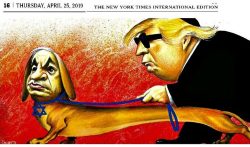


 When you were born and raised in New Bedford, Massachusetts, as I was, you grow up in an atmosphere of whaling history. At one time back in the late 1840’s, New Bedford was the richest city in the world. That’s right –not the country but, the world! It all came from a Quaker business, the collection of whale oil. The oil generated by the New Bedford (and earlier the Nantucket) fleets of whaling ships supplied the street lights of the world, the lamps of Italy’s opera houses, buggy whips, canes, perfume enhancers, candles and hundreds and hundreds of other products. The oil from the Sperm whale is the finest machine oil that has ever appeared on this planet.
 So, when you’re a kid in New Bedford and you go to the library or you accompany your parent to the bank or you go to a municipal building or go to school, you see all around you, paintings of the whale chase. Whales heeled over snapping whaleboats in their mighty jaws, hapless seamen falling through the air, mighty ships plowing through rampaging seas. Out in front of the New Bedford Public Library is the symbol of New Bedford, a sculpture of a strong whale man in the prow of a whaleboat, with his sharp harpoon in hand, ready to dart it. Now, on the other side of the library, stands a statue of a black harpoon maker named Lewis Temple. There are no existing pictures of Temple so the sculptor used a picture of his son as the model. This man invented a harpoon that revolutionized the whaling industry because it was designed in such a way that once thrust into a whale’s hide it stuck and didn’t pull out which was the problem with the harpoons that preceded it. It’s called the “Temple Toggle.” I own two 1800’s examples of this iron.


 As the years went on, I started thinking about my childhood and heritage and I began reading some whaling books. It was startling to me because I found such a connection to it. I was reading books that constantly mentioned New Bedford and mentioned the whalecraft shops that I realized were right in the neighborhood that I had grown up in. In the later days of whaling, the American-Portuguese had, pretty much taken over the business. The captains had Portuguese names that I was familiar with. I started to discover a history that I really never knew existed wherein the whaling industry, playing a big part in the Revolutionary War (that tea-party adventure in Boston was on a whaleship), the Civil War, the Gold Rush and more. History teachers tell me that they too have been unaware of this rich history.
 In my extensive readings on whaling lore, I discovered a whale named “Mocha Dick.” He was a white whale who rampaged through the Pacific in the 1800’s eating whaleboats and whale men seemingly seeking vengeance on the enemies of his brethren. He was based around Mocha Island off the southern coast of Chile. Mocha is pronounced with a “cha” sound rather than a “ka” sound because it’s Spanish (but try to tell that to the rest of the folks out there who study whaling lore). All the whale men of the era knew of Mocha, including Melville who later used a version of his name for his great Moby Dick.
 An art director friend from The Wall Street Journal, Dan Smith asked if I’d like to do a book with him in his newly formed “Strike Three Press.” Dan loves books and he even likes to “make” books –I mean he binds them, hand stitches them etc. He asked me what I would like to do a book about and I quickly said “Mocha Dick”.
 Later, around 2013, the award winning designer, Rita Marshall was at my house and saw a big picture of Mocha Dick that I had made. Months later she told me that she couldn’t get that picture out of her head and also said that they had a manuscript from a writer named Brian Heinz on Mocha Dick. And, so, another Mocha Dick book was crafted for her company Creative Editions. It’s a rather sophisticated children’s book. Thanks to some great starred revues from places like Kirkus and some mentions on important websites like Brainpickings.org and the Atlantic Magazine’s, we got so many advanced purchases on Amazon that we sold out the first edition two weeks before the book was even released. I was blessed to have a great writer on board that trip around.